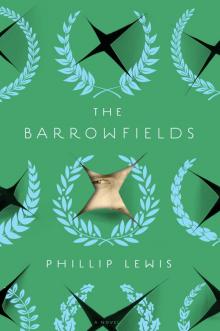
The barrowfields, p.13
The Barrowfields, page 13


On the day in November before Father left, I was downstairs playing the piano and Threnody called me from upstairs.
“Henry!”
I kept playing.
“Henry lion!”
I found her waiting at the top of the iron staircase that led to the library. She was dressed like a sleuth, with a magnifying glass and a trench coat too big for her that hit the floor around her feet, artifacts left over from our reading of all the Sherlock Holmes stories. It was a disguise for her mourning. We were dealing with the death of our sister in different ways.
“Hello, Bird.”
“It’s time for a new book, isn’t it?”
“It is time for a new book,” I said. “Want to pick one out?”
Threnody climbed on the ladder and upon the impetus of a well-practiced push, she shot away from me down the wall and the ladder scraped noisily along its rails before clattering to a stop.
“You’re not supposed to do that,” I said. “My god, if something were to happen to you—”
“All the good books are down here.” By “all the good books” she meant Father’s collection of literary fiction. By that point he had at least as many books as the public library, and certainly his varied assortment was worth far more. Many of them were signed first editions, and all the books he had read through the years contained loose pages of his notes tucked inside the front jackets. He always looked up and wrote down the definitions to all the words he didn’t know, and he would consult these lists from time to time as an aid to his writing. As long as we handled the books carefully (certain books required supervision and gloves) and they didn’t leave the premises except under careful guard, we were encouraged to read anything we could find.
“Do you think I’ll ever be as tall as you?” We stood eye to eye, with Threnody on the third step of the ladder.
“You’ll be taller,” I said.
“You and I look a lot alike, don’t we?”
“Yes we do, Bird.”
“I wish my hair was blond like yours.”
“I know,” I said. “I wish my hair was brown like yours.”
“Maybe it will turn brown.”
“I’m sure it will. If it doesn’t, I’ll color it brown.”
“I like that idea.” She began randomly pulling out books and inspecting the covers.
“I know you’re going to veto whatever I pick out,” she said.
“No, I won’t. Okay, maybe I will.”
“You always do,” she said.
“Because I know the really good ones. Have I ever let you down?”
I was surprised to see that Threnody gave this question some real thought.
“So there have been a couple,” I said.
She first selected The Mists of Avalon because she liked the cover, and with some reluctance I wielded my veto power as she predicted and found The Hobbit for us to read instead. “This is a real adventure,” I told her, thinking it would be good for us both to spend some time in the Shire instead of in rainy Old Buckram.
“Is it really?”
“It is, really. I promise. You’ll love this.”
She said, “Let me see it,” but her red, sticky fingertips suggested otherwise.
“Father will kill us both,” I said. “Look at your hands.” She instinctively licked at a shiny thumb to salvage whatever was left of a lollipop or jawbreaker that apparently had to be removed from her mouth several times before it could be consumed entirely. In the interest of our mutual survival, I gently replaced the early-edition, archivally wrapped copy of the book with a dog-eared paperback version that sat on the shelf beside it (73rd printing; August 1979) and handed it over to Threnody for a close-eyed inspection. She scrutinized the cover—Tolkien’s painting of Bilbo coming to the huts of the Raft-elves—with a sour face. I told her to trust me and she said, “You always say that.”
“One chapter and you’ll be hooked,” I said. “Look at these maps!” I showed her Thror’s Map and the map of Wilderland, with the spiders, and the dark forest, and the dragon, and the mysterious runes. Threnody was always a sucker for maps. We both were. There was little that would entice us into a good book more than an ancient-looking map.
“You’ve got my attention,” she said, which was one of Father’s famous lines. I followed her in the wide arc around the library railing and turned down the hall and into her bedroom. She climbed into her bed and I sat in the chair beside it. We had spent many an hour reading in these respective spots.
“Are you okay, Bird?”
“I think so.”
She closed her eyes and said, “Read to me, please.”
—
I read until I thought she was asleep.
“Bird,” I whispered. “Are you still awake?”
“Yes,” she said without opening her eyes. “Keep reading, please.”
“I think you just fell asleep.”
“No, I didn’t. I just have my eyes closed.”
“Then what just happened?”
“Gollum just asked Bilbo what he has in his pocket.”
“Well, what does Bilbo have in his pocket?”
“The ring, of course. Please read.”
She was innocent like children are, and full of wonder. In the winter, she was an observant downy bird on a frozen branch waiting eagerly for spring. In the spring, she was an early flower straining skyward beneath a cold and hopeful sun. And we all left her—every one of us but Mother. We left her there, in her encroaching world, where her magnificent heart diminished. I crossed the land between us with a sad and heavy heart.
A lonely twilight lay upon the city when I arrived in Charlotte. I had told no one I was coming, and a dull, persistent ache turned my stomach inside out. Still, Mother’s “just in case you decide to come visit” directions were good, and I found where I was going without a lot of trouble.
The house was situated just off Sharon Road in Myers Park. This, I discovered, was (and still is) a very nice part of Charlotte. The kind of place where you drive by a stately brick manor that spans half a block and say, “Is that one house or two?” Every yard I drove past was manicured with organized, expensive landscaping, and all the houses had hand-washed, glinting German automobiles parked out front. There were wooden jungle gyms built by licensed general contractors, and archways, and trellises, and green-tiled roofs, and perfectly cultivated ivy covering entire walls of stucco. Mother’s new house was no exception, but nothing in the world felt right about it. I rang the bell and then knocked but no one came to the door, so I walked around the yard and found Threnody sitting on the back porch reading a book. I stepped through an imposing hedge of Leyland cypress and startled her violently, but she didn’t get up. She just looked at me and I looked at her. I said, “It’s okay. It’s me.” Had it been so long that she no longer recognized me? “Go back around,” she said. “You can’t get in this way.” She met me at the front door and gave me a halfhearted hug and immediately returned to the back porch where she resumed reading. I followed her out there.
“Is Mother here?”
“No—she went to dinner and the movies. She won’t be back until late.” The porch was partially enclosed and a trio of white wicker chairs with red-striped comfy cushions sat at 9:00, 12:00, and 3:00 with a glass table between them. The house backed up to a golf course and the voices of four Scottishly attired men purled through the interstitial trees and reached us as indistinguishable murmurs. I asked Threnody what she was reading because otherwise it seemed she was content not to speak to me.
“Ender’s Game,” she said without looking up. “You’ve probably never heard of it.” With the feigned indolence of a teenage girl, she languidly turned the cover of the book for me to see. “It’s good. I’m almost finished with it if you want it. I’d say I’d let you borrow it, but it’s not mine.” She went back to reading.
She had grown so much—had changed so much—since I had last seen her. Her hair, a soft chestnut brown, fell just at her shoulders. It was no longer a child’s haircut and made her look prematurely grown up. Her knobby knees and elbows and coltish legs that used to go in six different directions were still coltish but now appeared strong and lean. Her movements, though, were abrupt and unsure. When she stood and walked, she took on the slightly stooped posture of a girl who’s not yet accustomed to her new height.
I stared at her and tried to figure out who she looked like. I finally realized with a mild shock that she had our mother’s face but our father’s expressions. Her eyes went back to her book and began to scan the page with a look of profound concentration. I tried again.
“Do you want to go for a walk? It’s a nice night,” I said. “You can show me around the neighborhood—”
“No,” she interrupted, and turned a page. It was clear she was pissed at me and I deserved it. I had it coming and there was nothing I could do but take my lumps.
“Are you hungry? Do you want to go get some dinner somewhere? I haven’t eaten anything—”
“No, I ate already.”
“Oh, really. What did you eat?”
“Chicken something something with asparagus and holiday sauce.” This was an old shared joke delivered without mirth. With an exasperated sigh, she closed her book and put it neatly on the seat between us.
“I’m embarrassed that I don’t even know whose house this is,” I said. “It’s nice.”
“You should be. It’s Mother’s boyfriend’s. Isn’t it lovely? I don’t really have my own room here. I mean, I have a room, but it has someone else’s things in it.”
“She has a boyfriend?”
“Why else do you think we’d be staying here? You’d know if you ever called. They’ve been dating for a while.”
“Interesting. Where’d they meet?”
“You’ll have to ask her. It’s gross. His name is Hurricane.”
“Hurricane? You’re shitting me.”
“Nope—it’s on his birth certificate and his nine million diplomas. I’ll show you.”
“Wow.”
“Could be worse. He could be named Threnody.”
“How does one—”
“I have no idea.” She pretended to examine her fingernails and I admired the carpeted golf course gleaming away behind huddling poplars and pines that clustered self-consciously in the backyard.
“Do you like him?”
“He’s all right. Mostly harmless, I guess. He doesn’t really like to drink, which bothers Mother. When he does drink, he only drinks expensive beer he gets from Germany or somewhere. This also bothers Mother. Something about pretention.”
“You’d think she’d be thrilled with a little moderation.”
“I know. She can’t have it both ways.”
“What does he do?”
“Not much of anything. He’s a lawyer, but he doesn’t go to court. He wrote a book once.”
“Yeah? Did you read it?”
“I did. It was beyond terrible. Here’s terrible, and here’s the book.” She held out her hands like she was measuring for a couch.
“What was it about?”
“It was about a lawyer—who…wrote a book.” We laughed and I remembered how we always had exactly the same sense of humor and how we’d always simultaneously die laughing at things no one else found funny.
The mosquitoes got the best of us, so we went inside and Threnody showed me perfunctorily around the sprawling house before sliding onto a velvety, decorative chaise longue stuck in one corner of the living room. Overhead, a lighted paper globe hung from the ceiling like a minor planet. Even though we’d been apart for so long and so much had happened in the temporal and spatial gulf between our increasingly divergent lives, for a moment neither of us could think of anything pertinent or appropriate to say. Threnody got up and put on some music and then resumed her position cross-legged on the chaise. Again, certain cuticles and then the fabric of her skirt became of momentary interest. Remembering her manners, she said, “Do you want something to drink?”
“No, thank you.”
“Help yourself.”
“I will, thanks.”
“Make yourself at home. Fridge is in there.” Pointing.
And then: “I’ve really missed you, Bird.” She held herself and began to cry.
—
On Saturday morning, Mother was waiting for me in the kitchen when I got up. Apricot pajamas, lemon designs. Soft-soled slippers with pretend leather laces. She was drinking coffee and had Leonard Cohen playing somewhere in the sun-drowned house. “Hallelujah” ended and “So Long, Marianne” began discordantly and waltzed and chugged away in the void and moved in and out of my awareness. She ran to hug me as I walked down the wide hallway from the guest bedroom dressed in my clothes from the previous day.
“I couldn’t believe it when I saw your car in the driveway last night. It was everything I could do not to go in and wake you up. Why didn’t you tell me you were coming? I would’ve been here.”
“I didn’t know for sure I was coming,” I said, not intending to be cryptic, but not correcting myself when I realized it was. She looked me up and down; synclinal eyebrows told me she was not altogether pleased with my appearance.
“I think you might’ve grown,” she said. “You seem taller than you were before. Or else you lost weight….Can I make you some breakfast?”
“I’m not really hungry yet. I don’t really eat breakfast,” I said. “I’d love some coffee, though.”
“Let’s go in and sit down. I want to hear about everything.”
I followed her into the living room. I passed a couch upholstered in what looked like rhinoceros skin and sat on Threnody’s chaise. Mother sat in the chair opposite. Our usual places, but this time in someone else’s house. Between us, a vase of flowers sat on a coffee table, white and cornflower blue.
And so it began:
“How are you? How are things up north? School is good? I’m so happy that you came down. Are you here for the summer? Do you know what you’re going to do yet? Threnody is so happy you’re here. You guys will have lots of time to reconnect.”
I’ve always felt uncomfortable talking about myself. It feels like interrogation, and this time it made me surly and recalcitrant for no good reason. “School is good,” I said, fielding the one question I could safely answer. “I’m learning a lot.” My coffee was too hot to drink, so I set it on the table. A band of sunlight caught the rising steam, and my eyes burned from lack of sleep.
“Yeah?”
“Yeah. I’m taking a lot of cool classes.”
“What are you taking?”
“Is this where you’re going to live now?”
Mother looked around for Hurricane. Listened for him. Evidently he wasn’t there.
“There’s no piano,” I said. “There’s not much in the way of books.”
“I don’t know where we’d put it,” she said, fielding the one question she could safely answer. “This isn’t my house. But I miss hearing you play. Are you playing a lot?”
“Yes—I’m playing some, and the guitar, too. Believe it or not, I can actually play some of those pieces that used to give me so much trouble.”
“Are you doing any concerts?”
“No—I could have, but I didn’t sign up for them.”
She held her coffee in both hands as if to warm them. I looked around the room at nothing in particular. In the time I was away, we had become strangers. She took another drink of coffee and pulled her legs into the chair.
“I know I’ve told you I want you to play that one Liszt piece at my funeral. I just love that.” Whenever Mother heard a piece of music she thought lovely or sublime, she’d ask me to make sure to play it at her funeral. It wasn’t as dreadful a sentiment as it sounds. It was more of a way to poke fun at death; to say she wasn’t scared of it.
“Which Liszt piece?”
“The really beautiful, slow one you used to play. The one that twinkles like the stars.”
“I didn’t play that. Father played it.”
“Are you sure you didn’t play it?”
“I’m sure. It’s one of the Consolations. Father played that one.”
“I’ll have to make a note,” she said. “Still, can you learn that one to play at my funeral, and then also play ‘Greensleeves’? That’s my other favorite.”
“I’ll have to make a note,” I said. Silence flowed into the space between us and then Leonard Cohen returned and “Bird on the Wire” emanated nasally from the ether.
“Are you getting along okay down here?” I asked, finally getting over myself; finally remembering that it wasn’t all about me.
“It’s a lot different. The hardest part, and maybe you wouldn’t guess it, was letting go of the horses, even after everything that happened. Maybe because of everything that happened, I don’t know. There’s a horse place north of here that I’ve heard about—it’s at some kind of plantation, with nice rock walls running along the road and some nice trails along the Catawba River—but we’ll just have to see.”
“Any Arabians?”
“No—mostly quarter horses. Which I don’t mind. But it’s something to think about for now.”
“Something to think about,” I agreed.
“Your sister’s struggling a little bit in her new school.”
“What do you mean?”
“She doesn’t have many friends.”
“I’m not surprised by that.”
“Why do you say that?”
“Because she’s like me. The things she’s interested in, other kids her age are not interested in. How many kids do you think she’s going to school with have already read Crime and Punishment? I’ll tell you. Probably zero.”