

Unravel, p.1
Unravel, page 1
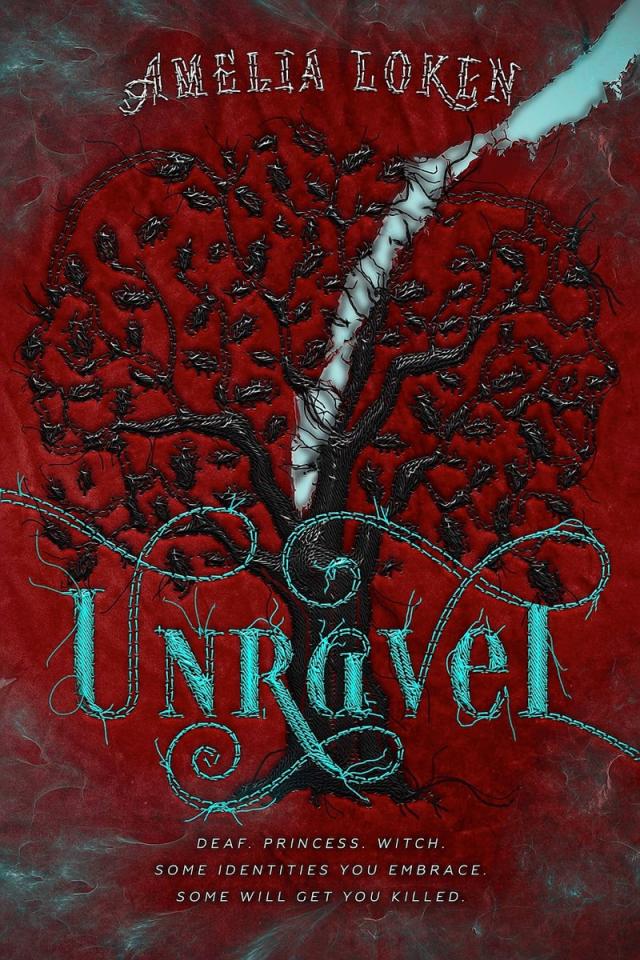


UNRAVEL
AMELIA LOKEN
Copyright © 2021 by Amelia Loken
All rights reserved. Except as permitted under the U.S. Copyright Act of 1976, no part of this book may be reproduced or used in any manner without the prior written permission of the copyright owner, except for the use of brief quotations in a book review.
Sword and Silk Books
105 Viewpoint Circle Pell City, AL 35128
Visit our website at SwordandSilkBooks.com
To request permissions contact the publisher at
admin@swordandsilkbooks.com.
First Edition: February 2022
The characters and events in this book are fictitious. Any similarity to real persons, living or dead, is coincidental and not intended by the author.
Ebook: 978-1-7364300-9-5
For my mother, whose love and stories built a foundation as strong as the Valon Mountains.
And for my husband, whose love and admiration flows as generously as mountain streams toward Lake Clair.
Contents
Chapter 1
Chapter 2
Chapter 3
Chapter 4
Chapter 5
Chapter 6
Chapter 7
Chapter 8
Chapter 9
Chapter 10
Chapter 11
Chapter 12
Chapter 13
Chapter 14
Chapter 15
Chapter 16
Chapter 17
Chapter 18
Chapter 19
Chapter 20
Chapter 21
Chapter 22
Chapter 23
Chapter 24
Chapter 25
Chapter 26
Acknowledgments
About the Author
Coming Soon from Sword and Silk
A Special Thank You to Our Kickstarter Backers
My thumbs prick with temptation, the yearning to thread my magic into the muslin cloth almost irresistible. That cannot happen.
Not on a burning day.
Clutching my embroidery hoop with sweaty, twisted fingers, I follow Isabeau and the others in our orderly procession. Sometimes the magic swells like this, filling me like heavy thunderclouds fast approaching the Valon Mountains. I must hold it tight, else the magic will dribble into my embroidery, my clothing, or any other cloth I brush against.
Voyants are here, close. One glance, and they’ll notice the resulting Otherlight glow. Some voyants aren’t as skilled as others, but I’ll not stake my life on such a chance.
We file past the raised stone platform in the middle of the square. Bundles of kindling lean against firewood lining one whole side of the knee-high stonework. Enough to make a good-sized bonfire. The stone pillory stands stark in the center. A pair of stocks usually flank it, but they’ve been removed. Today’s trial won’t end in a pelting of rotten vegetables. Nor with twenty lashings. Not for a trial of the most grievous offense.
Witchcraft.
Fire stops a witch’s magic from spreading. Without fire, witchery sweeps from one feeble female to another, like a plague. Or so my uncle says, which is nearly the same as official church doctrine.
But fire doesn’t stop witchcraft.
Magic is like breathing, and no one can hold their breath forever.
I’ve been subtle, figuring out the ebb and flow of my Gift’s demands. Making sure I only use my magic when I’m certain no voyant will be around to see my Otherlight aura, or for the two days afterward while I still gleam. Unfortunately, none of us heard about the trial until yesterday, when I was already sloshing full of magic.
We file toward the benches on the south side of the square, already full with the women of St. Clotilde’s Abbey. The nornes study every move from the back, three rows of them in charcoal gray. The novices sit before them in unflattering tones of ash, and in front of them sit the postulants in lighter shades of gray wool. The rest of us, their students, wear the pale gray of dawn. We’ve made no vows to the Seven Sisters of the Pleiades. Not yet. We settle on the front row benches like pigeons along a rooftop. The pillory is only ten paces before us. We have the best view and are on full display ourselves.
The abbey and St. Clotilde’s cathedral cast a long morning shadow across half the benches from their perch on the mountain shoulder above us, creating an inviting coolness in the late summer heat. I sit fully under the morning sun’s rays. Any Otherlight shine might be less obvious—
A trickle of wayward magic seeps into the cloth. I clench every muscle.
My skin tightens. My embroidery hoop trembles.
I change tactics.
I’ve a theory I’ve only begun to test. I’ve little affinity with wood, or plants, or metal, or stone. Perhaps if my magic isn’t flowing directly into thread or cloth, and I’m not purposefully using it, any resulting Otherlight will be dim? The magic might soak from the bench into a dozen gray skirts but should still remain faint. My theory has seemed to hold up so far.
Fates, so let it be!
I grip the bench, letting magic dribble undirected from my palms, hoping it’ll pool on the wooden surface. The tightness loosens. I sigh.
As the rest of the square fills with townsfolk, the abbey Threadmistress, Sister Egethe, takes her place before us like a field officer surveying infantrymen. We straighten our spines. When she looks down the line, I realize she’s already speaking. I focus on her serious expression. She stands to my right, so her words are inaudible. The teachers have been told I can’t hear on that side, but they always seem to forget. The left’s not much better, but until she moves, I must watch her lips. Something about embroidery and the trial. My hands lift to the silver combs holding tight, dark curls away from my face. A gift from my godmother years ago, they seem expensive but also ordinary. I press them against my scalp; the teeth of the combs bite my skin and her words amplify to an audible murmur.
“… Begin your thread-sketches. Whilst the trial proceeds… stitch the essence… speed, not precision. No colored silks… necessary.”
I pull the cloth taut in my embroidery hoop and thread my needle with silk as black as my own hair. Black is good. It’s stark, truthful, dyed with oak galls gathered from groves descended from the Valonian Oak. Each of my grandfather’s seven thrones are carved from that legendary tree, for none can stand before it and utter lies. With black thread, magic feels more manageable. Less wild.
Sister Egethe’s hands move as if offering a blessing. “… Your thread-sketches will be used as references for the tapestry commissioned by the Bishop-Princep.”
I tighten my jaw. I’ve no love for the Bishop-Princep. His Bonifactum Edict issued last year introduced superstition and suspicion throughout Valonia, sweeping through each village, abbey and manor. I keep my expression neutral; catching the eye of Sister Egethe will bring consequences, which might tempt the Fates’ notice. Notice brings interest. Interest brings curiosity. And when the Fates become curious, they play with the threads of your life, twitching one here or pulling one there. The resulting upheaval rarely proves beneficial.
So, wrapping my left hand’s stiff, twisted fingers around the embroidery hoop, I obediently dip my needle into the cloth. The black silk slips after, again and again, until it outlines the pillory in the middle ground and the three-story guild hall behind it. The building dwarfs a faceless crowd of townsfolk below, indicated with small loose stitches.
The folk grow rowdy until the abbey bells chime Terce hour. The crowd quiets.
My stomach flips. There’ve been burnings in a few villages since the edict passed, but this is the first in the Clair Valley. The first I must witness.
The Moir Brethren from St. Clotilde lead four manacled women onto the raised pavement. I shudder as the clergymen jostle the women into a line. Stained dresses, once pretty, hang on too-slender bodies. There are books in my grandfather’s library with theories that starving a witch takes her power. It’s a backward logic that accidentally lands on truth, and those books have migrated from the library to my uncle’s chambers. Did he direct his men to only feed these women enough to keep them alive while his magistrates searched for evidence? Someone did. Men seem to find starvation a natural precaution to panicked, desperate magic.
Isabeau elbows me. “Stop staring.” She always sits to my left so I can hear her.
Isabeau’s seventeen, a year older than I. When we were younger, I pretended she was my sister. She’s tall, with hair straight as a mason’s plumb line, yet we look more alike than not: brown eyes, freckles, and dark hair. I’ve trusted her since my first day at the abbey. I’d lined up with the others but missed when a novice gave instructions. Offended at my inattention, the novice grabbed my ear, pulling me toward the door, stating the nornes didn’t need a crippled, deaf girl. She tasted Isabeau’s fist before they were both informed that the “crippled, deaf girl” was the princess. Isabeau avoided trouble thereafter… apart from our clandestine puppet shows after lights out and regularly misplacing her embroidery needles. Her current needle darts around the nearly complete central image. My stomach curls at the suggestion of figures tied to the pillory, all nearly engulfed by the stitched outlines of flames.
“He’s not passed judgment,” I whisper. Though the women will not be found innocent, it seems wrong to illustrate their deaths before it happens. Isabeau returns to her needlework without reply, for the Threadmistress swoops before us.
“A lovely scene, Princess Marguerite.” She over-shapes her words as she points to the empty center. “Only the witche s left to add.”
Solemn drumming saves me from answering. More gray-clad brethren proceed into the town square. Behind the clerics march the Abbot of St. Clotilde and the Lord Mayor of Tillroux. I hunch at the sight of the man marching shoulder-to-shoulder between them.
My uncle Reichard.
Bishop-Princep of Valonia.
He’ll preside over the proceedings, magnificent in his black cassock, the Seven Stars of the Pleiades embroidered with diamonds across his chest. He overshadows the two white-clad voyants following at his heels. My uncle brought a dozen of the witch-hunters with him when he returned to Valonia from his duties with the Knights Pleiades. The voyants’ faces are scarred from initiation rites they underwent at the end of childhood. Their eyes scan the crowd, searching for telltale gleams of magic. Their hands rest on the pommels of their cold-iron long knives. Everyone knows that when a voyant unsheathes his knife, a witch faces her death.
I curl my twisted left hand further under my embroidery hoop and make myself smaller.
The Bishop-Princep only answers to the Seer of the Stars and the Fates themselves. The only being in Valonia who might check his power is my grandfather, the king, and perhaps my father, the crown prince. My uncle, of course, would never heed a word I say. I proceed him in line for the thrones, but I’m too female, too deaf, too maimed, and though he doesn’t know it, too magic for his respect.
The drumming stops. The voyants flanking my uncle, not fifteen paces away, turn my way. They squint, focusing their Sight as they scan the crowd. I shiver, willing my body to imitate a well-corked jug.
Isabeau nudges me. “Get back to work. People will notice.”
I ply my needle once more, outlining the four figures. Two young, one old and hunch-backed, and the last middle-aged.
The trial starts. The voyants continue looking in my direction, so I keep my head down. I can’t hear much at this distance without watching someone’s lips, but like Isabeau, I know how this will end. It’s better to remember the women’s faces before they beg. Before they scream. Before they’re consigned to a fiery, “cleansing” death.
The young woman on the far left—her dress has the faintest blue Otherlight sheen—is charged with Skeincraft. The same “crime” I’ve committed hundreds of times, except my embroidery stitches never kept a child from drowning, and I’ve never been caught. The next, a rather plain girl, doesn’t shine at all. If she ever concocted the love potion she’s accused of creating, there’s no trace of magic about her now. A subtle, green glow lingers about the third, her wrinkled hands hanging wearily. An Herbwitch—the easiest to find and condemn. If voyants sniff too close, folk merely point them to the nearest healer, then sweep up evidence of their own magic and slip away before the voyants return.
The last, a matronly woman, stands tall and defiant, a golden aura glimmering about the iron shackles binding her hands and feet. The brethren should’ve used rope to bind a Forgewitch. The woman crosses her large arms with an air of indifference that draws me into the proceedings. When my uncle turns toward me, my eyes follow his mouth and expression.
“… Your children are unnaturally large and strong,” I see him say to her. “Nine of them. Half the children of Tillroux fell to the Fates when the red pox came through last winter. Not one of your children died. That seems… peculiar.”
The woman doesn’t buckle under his stare. “My husband, Stars rest his soul, was a big man, as any blacksmith should be. And I’m not a small woman.” Her words are easier to follow, for she speaks boldly. “Fates determined they’d be stout and steady. I’ve done nothing to alter their destinies, only what a mother should. Fed them, clothed them, gave them work to keep them strong. Can’t see how that’s defying the Blessed Fates.”
My uncle holds up a ribbon with a few dozen iron charms strung upon it. They swing ominously. “My voyants found charms in your shop.”
The voyants shift their gaze from the crowd to the woman. I release my breath.
“Those?” She doesn’t flinch. “They’ve hung from the rafters of that smithy since my husband’s grandfather’s day… hard put to find a smith without such.”
“Why is that?” He seems only curious, but it’s a trap. Stop talking.
“Protects the place from errant sparks. Keeps the smith’s eye sharp and his hand quick.”
A raised eyebrow. “Don’t the Fates have power enough to do that?”
She pinches her mouth shut, finally recognizing the snare, but then lifts her chin. “Fine. Take them all. You won’t see my sons using the forge without them.” She casts a glare at the townsfolk. “And if you turn my kin out o’ Tillroux, you’ll have troubled times finding a replacement. See how long you can last without a smith.” She says it like a curse and spits to the side as if to seal it.
There’s answering movement in the crowd as others spit. Enough to show defiance, but not enough to earn trouble. Through the shifting crowd an Otherlight glow comes pushing to the front, a boy with golden hair clutching a wilted-looking cabbage. He’s my age, or a bit older, and wearing an odd assortment of clothing. His wool cloak’s too heavy for such a warm day. A sagging tunic, made for a man thrice his girth, is snugged around his waist with doubled-up rope instead of a belt. His leggings are a growth spurt away from being too small, not staying tucked into his worn pair of boots. Strangest of all is his Otherlight gleam, bright as any female magic wielder’s and white as lamb’s wool.
I’ve never seen a male who used magic. Men can only sniff it out. Women give it form in charms, potions, and embroidery.
The drumming resumes.
Brethren push the women toward the pillory, tying them together, backs to the stone column. Other brethren place the wood and bundles of kindling around their feet. Nausea rises within me. I can’t watch. But I must.
“Witchcraft is the most insidious of sins against the Seven Fates.” My uncle captures my gaze as he circles the pillory. “Women, formed in the image of the Sisters… imitate the Fates… trying to mold the destinies of others… meddling, mischief, and ultimately to witchcraft… serving Eris, mother of strife and discord. We must purge Tillroux…”
His words fade as he turns away, circling the women. My entire body is taut. Eventually, his voice becomes audible again.
“You, madame, shall have your useless charms.” He flings them at the feet of the blacksmith’s widow. She shrugs. A brave mistake. He’ll seek higher stakes, something to make her flinch. “And each of your children shall be branded. All folk will know what sort of mother they had.”
The blacksmith’s widow blanches and tightens her jaw. That seems enough, for he moves to the old woman. Her cottage will be burned, her garden plowed under and sown with salt. A waste. Next winter, the townsfolk will rue that they’ve no herbwoman, no plants to soothe their coughs or bring down their children’s fevers.
The girl accused of making a love potion sobs as my uncle steps before her. She begs, perhaps claiming innocence. He steps closer, making the sign of forgiveness.
The girl sags, relieved—but he doesn’t release her.
I grip my embroidery tight as he turns to the woman with pale blue Otherlight. “You claim love motivated you to stitch enchantments… your son’s clothing… highest, holiest gift the Fates give to womankind… twisted… keep a child under control.”
“To keep him safe… prayed as I embroidered them.”
“Blasphemy!”
“No—” she protests.
“The Fates will keep him safe.” He points skyward. “The Fates will see to it that he fulfills his destiny, whether that life is long or short. Where is your faith, woman?”
She straightens and glares at him. Bruises mark her face; a nasty burn puckers her neck. The inquisitors haven’t been gentle.






